
On beauty
Is beauty essential or just a distraction?

Beauty is a topic on which endless tomes and treatises have been written. For some it is at the centre of their lives, while for others it is a topic of academic interest. It can ignite passionate and heated debates while others shrug their shoulders at its mention. A bit like love, really. For me, the notion of beauty carries an uneasy ambivalence, like a small pebble caught in the shoe, impossible to ignore even when I tell myself that it does not matter.
My unease is not so much linked to what we deem worthy of being considered beautiful, but the whole concept of beauty and whether it matters. On the one hand beauty can be a distraction, a seduction, a veil to hide things behind, from ourselves and others. Oppressive regimes often use aesthetics to express their power and create a façade behind which to hide the violence and repression.
Having a well developed sense of beauty does not imply having an equally well developed sense of ethics and morality. The pursuit of beauty itself can be deeply unethical and have damaging consequences for those in its pursuit as well as for others. Vast industries have sprung up around bodily ideals of beauty often with negative health consequences for those who make use of them: steroids to create a toned body, chemicals to give skin and hair the desired colour, injections, implants and other surgical procedures to create the ideal shapes of lips, eyes, breasts, stomachs. Though the current techniques of the beauty industry are new, the phenomenon itself reaches back in time. For hundreds of years corsets were used in the west to create desired body shapes from flat to hourglass shaped, while in China small and deformed “lotus feet” were considered an emblem of female beauty, achieved by binding the feet of young girls. In other places and at other times, other ideals dominated, some more painful and damaging than others.
Outside of our own bodies we also employ a host of techniques and tools to pursue the ideals of beauty dominating at the time. In gardens, chemicals and mechanical means are used to eradicate the presence of plants, insects and other beings we consider weeds or pests or that simply don’t fit with our plans and notions of beauty. Less intentional but equally devastating are the consequences when particular places become famous as ‘beauty spots’ and the large numbers of people seeking out this beauty end up creating problems such as erosion and disturbance or conflict with wildlife. Some places have been ‘loved to death’ in this way.
What is considered beautiful often seems arbitrary or rather linked to the looks possessed and endorsed by those in power. As such, standards of beauty and the ability to live up to them (whether in your body, home, garden or other areas of life) can and do act as powerful tools of exclusion and value. When internalised such standards can impact our mental and physical health contributing to feelings of worthlessness for those of us who do not live up to them.
Despite all of this, I find it impossible to completely dismiss beauty as irrelevant and something we should try to get beyond. Beauty can touch our hearts and change our minds. For the Romantics beauty was a doorway to awe and wonder, something also expressed in many spiritual and religious traditions. Here, beauty is seen as the expression of goodness and the divine. Noticing that beauty is still here, despite the ugliness and destructiveness of so many things at times feels like a life raft, something to hold on to when things threaten to overwhelm and leave me in despair. The thought that there is still beauty in the world, not as a superficial surface gloss but a deeper, inherent characteristic, can help me to keep going.
Noticing beauty can also be a way of coming to care, and maintaining or creating beauty can be a means of expressing care. However, here, too, there is an ambivalence, if it means that we only care for that which we deem beautiful. Many conservation charities know only too well that it is far easier to raise funds for cuddly looking or charismatic animals compared to insects, reptiles, fungi or plants (apart from those individuals or species that impress us with their size, longevity or some other outstanding characteristic).
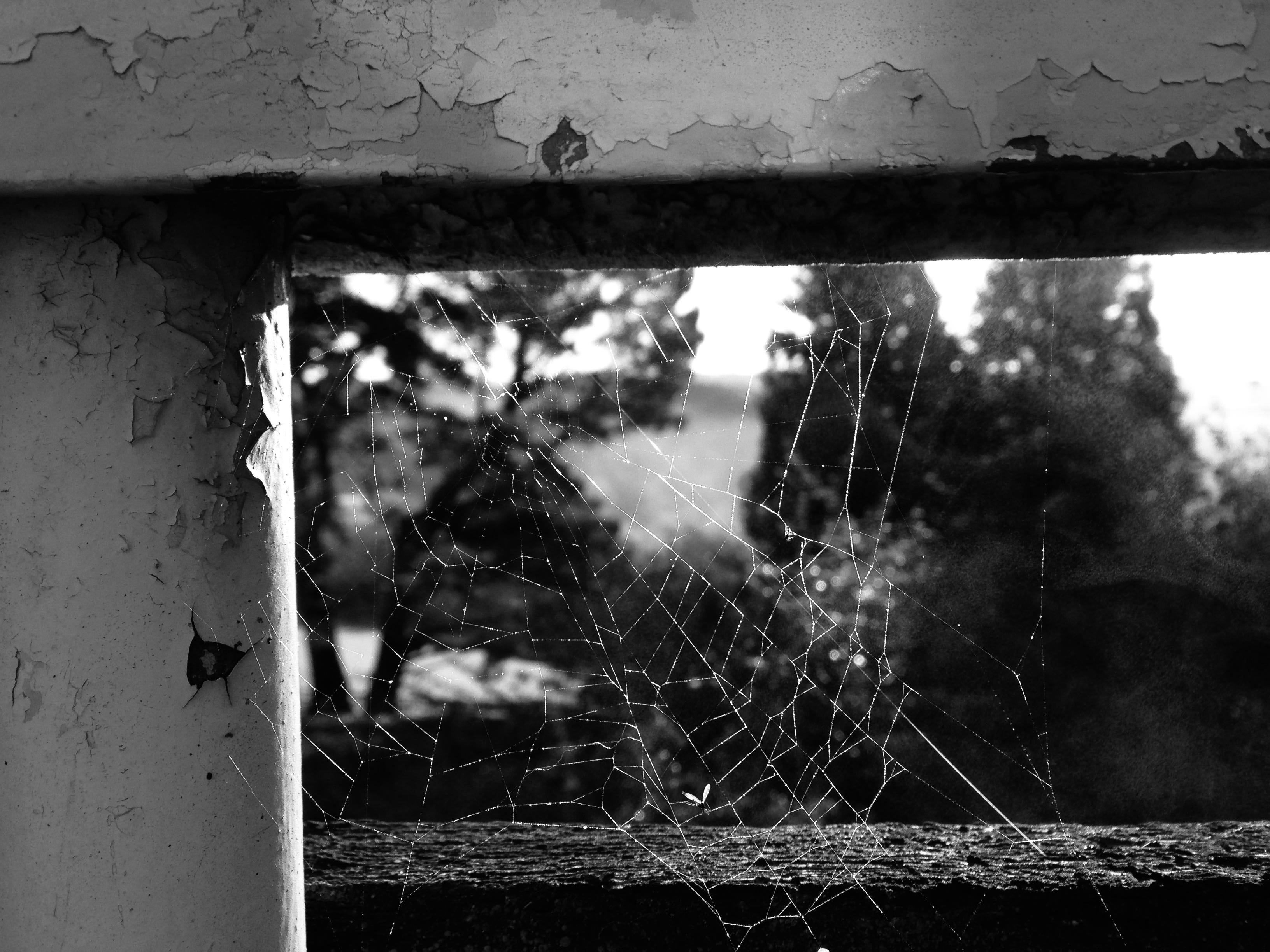
However, it also works the other way round: when I approach others with more attention and a care-ful intention, it can alter my perception of beauty. Many years ago I did an evening class in life drawing. During those classes I noticed how looking at bodies with such close attention made me appreciate them in a different way regardless of whether or not they were conforming to current ideals of bodily beauty. Wrinkles and the curve of a belly all held their own beauty. At the same time, though, my gaze and intention turned the individuals who had arrived at the arts class to model for us into objects, no longer seen as a person but as lines, shapes, surfaces, at least for the duration of the class. Similarly, when I take photographs trying to capture the beauty in my surroundings. It can help me slow down, notice and appreciate things and details I might otherwise have missed, while at the same time it can also reduce things to surface aesthetics. Hunting for the perfect image I can forget to pay attention to the sounds, smells and other senses and ‘just being’ in the moment and relating to the land and its beings as kin and relations.
In old folk tales with roots in European cultures beauty is often present as a defining characteristic of the central character. It usually comes alongside goodness, the two characteristics going hand in hand, the outer expressing an inner quality. The exceptions are those stories where outer and inner are in contrast with each other such as in the tales of the Beauty & the Beast, Lady Ragnell and Tatterhood. In these tales, outer ugliness is hiding the true value of a person, and the challenge is to see beyond the surface to the beauty and truth hidden underneath. In other stories such as those involving a deal with the devil, evil is conversely dressed up as beautiful and only small details such as the smell of sulphur, cloven feet, a tail or discrete little horns offer a warning about the true nature of the one who offers a seemingly irresistible deal.
The existence of these two different kinds of folk tales speaks to my own feeling of holding two competing understandings in my hands: on the one hand there is beauty as shallow, often arbitrary, or even misleading aesthetic; on the other there is beauty as a manifestation of a deeper truth about the world. As I’ve grown older, I’ve come to understand more and more things as ‘both-and’ phenomena rather than ‘either-or’. Beauty seems to be another case of this. I’m not always successful at holding the ‘both-and’ nature of things within me, especially when one understanding seems to contradict and exclude the other. My mind wants clarity, wants to put things into boxes so that I know where they are and how to act.
If beauty is mere surface, I can condemn it as smoke and mirrors, a distraction and false god, as the Puritans did and be proudly happy in my ugliness. If, on the other hand, it is an expression of the goodness of the world, I feel the urge to pursue it regardless of the cost. But if it is both, things become more complicated, less straightforward. I need to ask again and again and in each instance about what letting myself be guided by beauty and pursuing beauty does, what it implies. When I experience something or someone as ugly or beautiful, where does that ugliness, that beauty lie and what does it do to the way I interact with them? When I let my care for the world and other beings express itself through creating beauty (or at least attempting to do so) what are the consequences for those beings as well for others?
As so often, I will leave you with these questions rather than any firm conclusions. Feel free to leave a comment if these questions are also alive for you. I’d be curious to hear what beauty, and its twin shadow ugliness, means to you.
Thank you for reading.